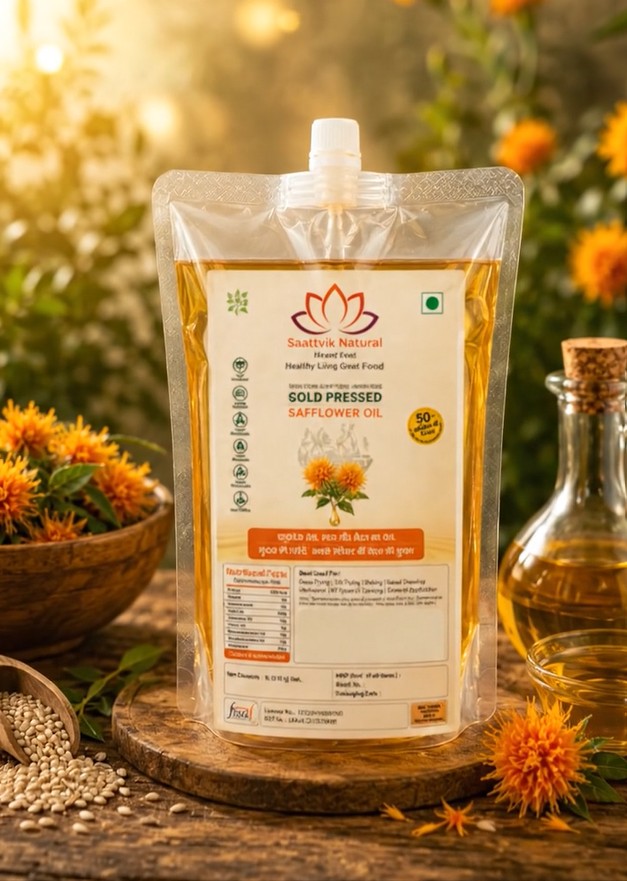
For years, olive oil has sat comfortably at the top of the "healthy oils" list — praised by nutritionists, celebrated by chefs, and stocked in every health-conscious kitchen. But there's another oil quietly earning its place right next to it: cold-pressed safflower oil.
Less famous, equally nutritious, and in some ways more versatile — safflower oil deserves a proper introduction.
Safflower oil is extracted from the seeds of the safflower plant (Carthamus tinctorius), a thistle-like crop that's been used for centuries. When cold-pressed — meaning extracted without heat or chemical solvents — the oil retains its full spectrum of natural nutrients, unlike refined versions that lose much of their goodness during processing.
Nutritionally, cold-pressed safflower oil is rich in unsaturated fats and vitamin E, a potent antioxidant that supports immune function and protects cells from oxidative damage.
Both oils are champions of cardiovascular wellness, just via slightly different routes. Safflower oil is rich in unsaturated fatty acids, particularly linoleic acid, which helps lower bad cholesterol and reduce heart disease risk. Olive oil, meanwhile, is famous for its monounsaturated fat content and its role in Mediterranean diets long linked to heart health.
The takeaway? You don't have to choose one over the other — both are strong, unsaturated-fat-forward oils that support a heart-healthy lifestyle.
This is where things get interesting. Both oils have their strengths in this department, but where extra virgin olive oil brings more polyphenols and antioxidants to the table, cold-pressed safflower oil counters with notably higher vitamin E content, giving it its own antioxidant edge, particularly for skin and immune support.
This is where safflower oil genuinely pulls ahead. Safflower oil boasts one of the highest smoke points among cooking oils, typically in the 450–510°F range, while extra virgin olive oil smokes at a much lower 375–400°F.
What this means practically:
Safflower oil is almost flavorless, making it perfect for dishes where you want the ingredients — not the oil — to be the star. Olive oil, especially extra virgin, carries a distinct, sometimes peppery or grassy taste that can elevate (or overpower) a dish depending on what you're cooking.
Think of it less as a competition and more as division of labor:
| Use Case | Better Choice |
|---|---|
| Salad dressings, dips, finishing drizzle | Olive Oil |
| Deep frying, stir-frying, high-heat sautéing | Safflower Oil |
| Baking (neutral flavor needed) | Safflower Oil |
| Mediterranean-style dishes | Olive Oil |
| Everyday cooking with minimal flavor impact | Safflower Oil |
Whichever oil you reach for, how it's extracted matters as much as what it's extracted from. Cold-pressing — done without heat or chemical solvents — preserves the natural nutrients, antioxidants, and flavor integrity of the oil. Refined oils, by contrast, often go through high-heat processing that strips away much of this nutritional value.
So when you're choosing between safflower and olive oil, the real upgrade isn't picking sides — it's making sure whichever one you pick is cold-pressed and minimally processed.
Olive oil earned its reputation for good reason. But cold-pressed safflower oil isn't far behind — and in the kitchen's high-heat corner, it may even be the smarter choice. Rich in vitamin E, packed with heart-friendly unsaturated fats, and versatile enough for everything from frying to baking, it's time safflower oil got its due seat at the table — right next to olive oil.
Looking to bring pure, cold-pressed safflower oil into your kitchen? Order now at saattviknatural.com or message us on WhatsApp at 7019091269.
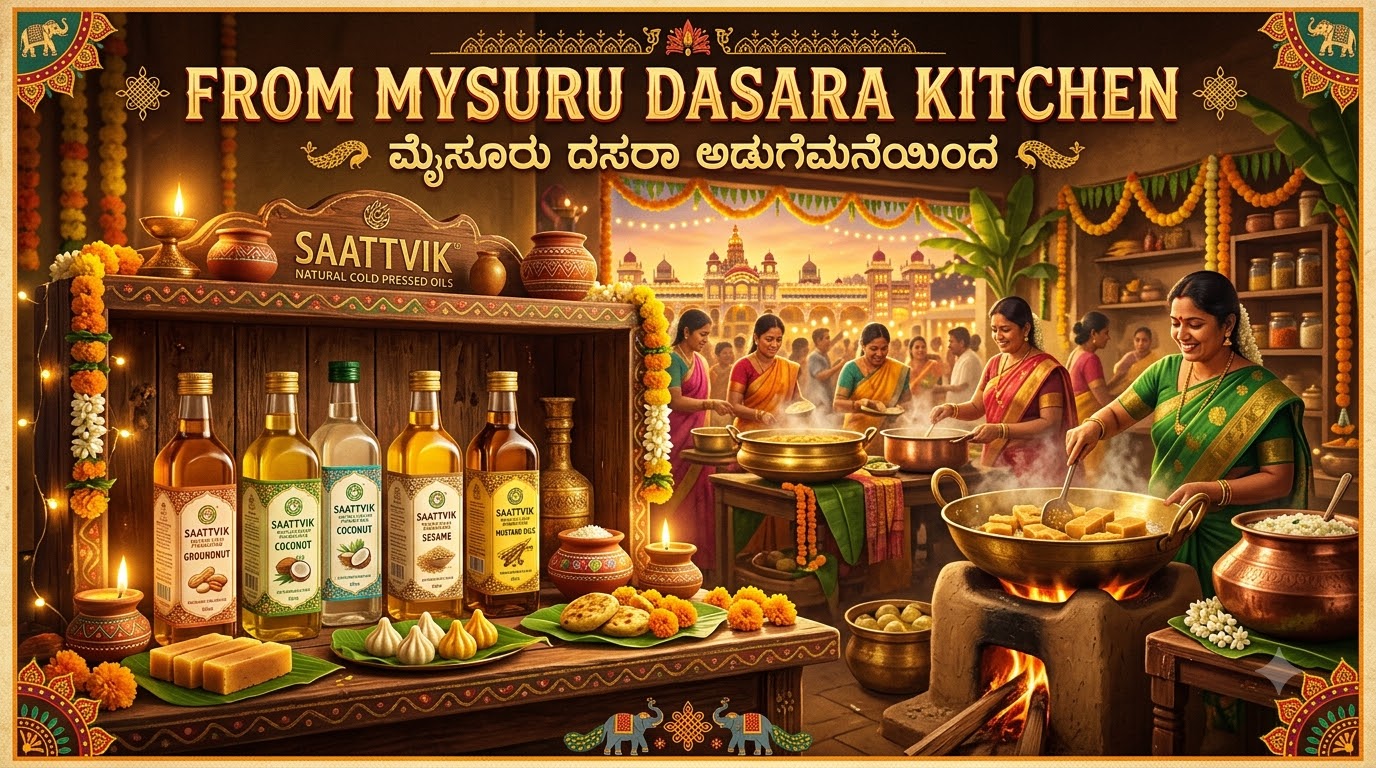
From obbattu to chakkuli, discover the four traditional oils (ellenne, kadalekai enne, kobbari enne and huchellu enne) that flavour a Mysuru Dasara kitchen.
Read More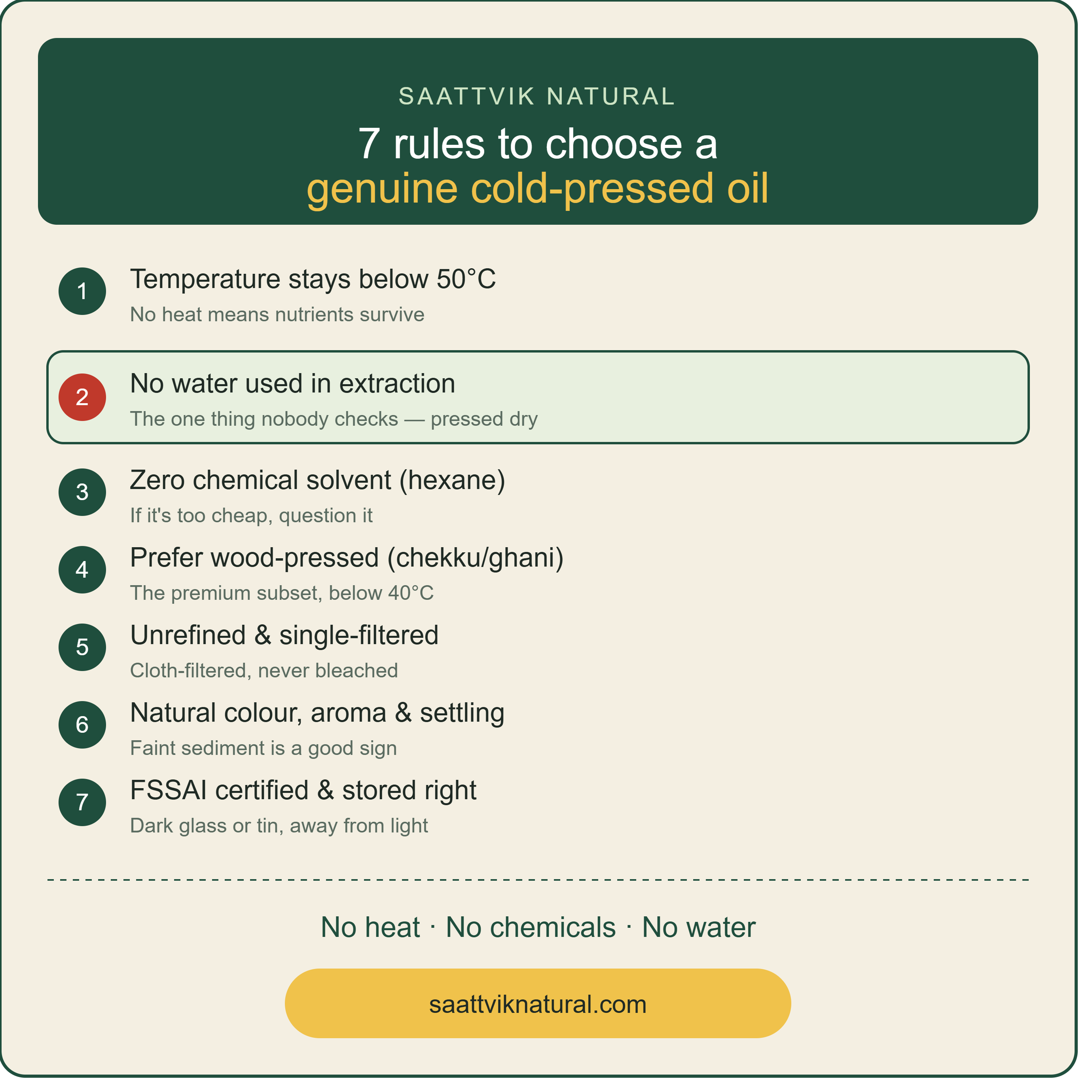
To choose a genuinely cold-pressed edible oil, verify four things — the extraction temperature stays below 50°C, no chemical solvent (hexane) is used, no water is added during extraction, and the oil is single-filtered and unrefined. The purest options are wood-pressed (chekku/ghani) oils, which stay below 40°C and retain the most nutrients.Cold-pressed oil labels in India have never been more confusing. “Wood-pressed,” “kachi ghani,” “expeller-pressed,” “cold-pressed,” “filtered” — the terms overlap and marketing blurs them. This guide gives you seven clear rules to pick the real thing, including one most buyers never check: whether water was used in extraction. #ColdPressedOil #ChekkuOil #WoodPressedOil #SaattvikNatural #HealthyCookingOil #FSSAICertified #NoChemicals #KachiGhani #CookingOilIndia #CleanEating #GroundnutOil #SesameOil #HexaneFree #TraditionalOil #EdibleOil
Read More
Refined oils go through heat and chemical processing that strips away nutrients. Here is why cold-pressed, wood-pressed oils retain more of what your body actually needs.
Read More