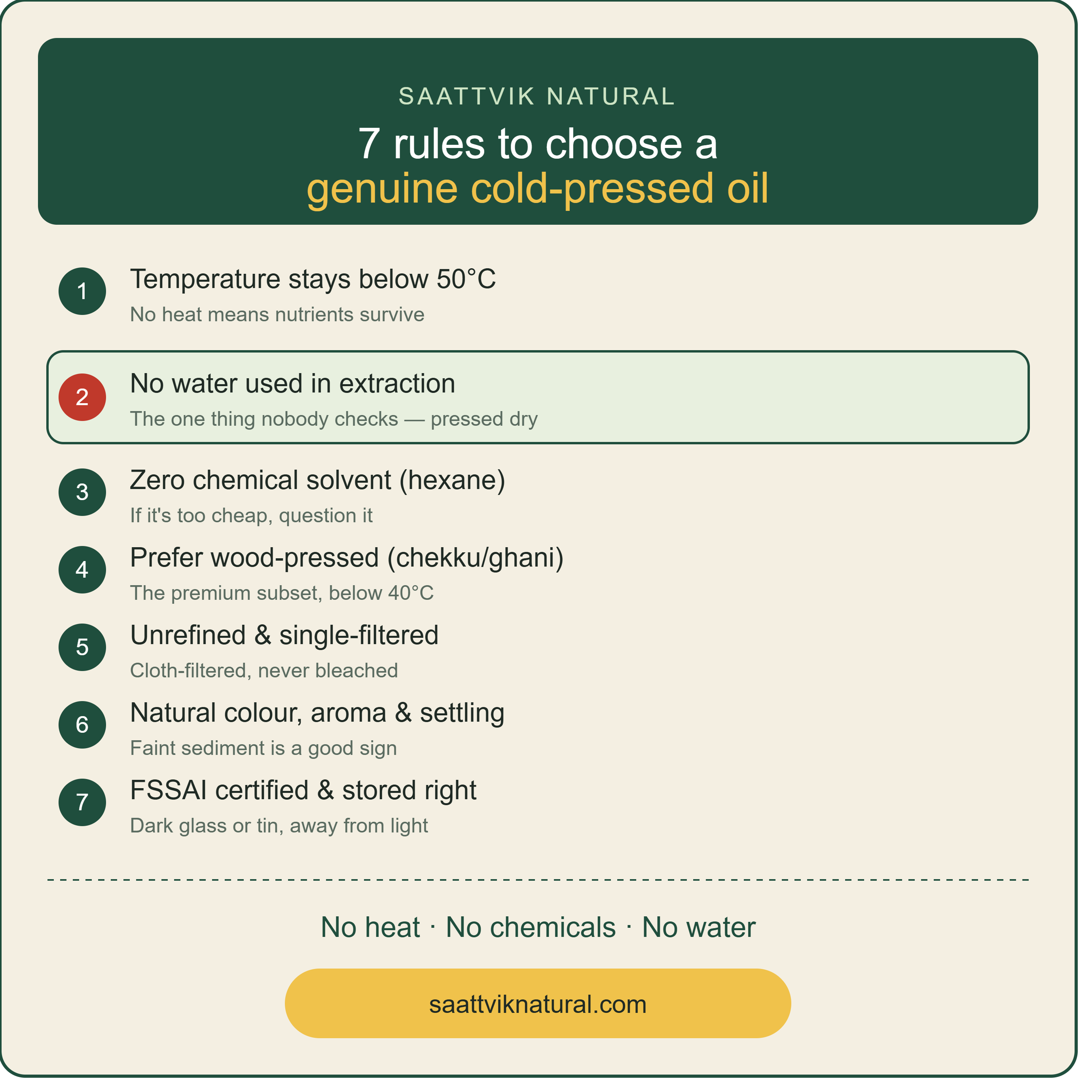
Quick answer: To choose a genuinely cold-pressed edible oil, verify four things — the extraction temperature stays below 50°C, no chemical solvent (hexane) is used, no water is added during extraction, and the oil is single-filtered and unrefined. The purest options are wood-pressed (chekku/ghani) oils, which stay below 40°C and retain the most nutrients.
Cold-pressed oil labels in India have never been more confusing. “Wood-pressed,” “kachi ghani,” “expeller-pressed,” “cold-pressed,” “filtered” — the terms overlap and marketing blurs them. This guide gives you seven clear rules to pick the real thing, including one most buyers never check: whether water was used in extraction.
Cold-pressed oil is extracted by mechanically crushing seeds or nuts at low speed, keeping the temperature low enough that natural nutrients, antioxidants, and flavour survive. Cold pressing is defined by Codex Alimentarius as keeping temperatures below 50°C throughout extraction. Unlike refined oil, it is not treated with heat or chemicals afterward.
The key distinction from refined oil is simple: expeller pressing and refining use intense friction or solvents that generate heat from 60°C to 99°C or higher, which breaks down heat-sensitive nutrients, while true cold pressing preserves them.
Real cold-pressed oil never crosses 50°C during extraction. Wood-pressed oil stays below 40°C, while steel cold-pressed stays below 50°C — a meaningful difference for the most heat-sensitive compounds like tocopherols and volatile antioxidants. If a label won’t state the temperature, treat that as a red flag.
This is the rule almost nobody checks. Genuine cold pressing is a dry mechanical process — seeds are crushed and the oil flows out, then settles and is filtered. No water is added to separate or extract the oil. Water-assisted or “wet” extraction methods can introduce moisture that shortens shelf life and invites rancidity. Pure cold-pressed oil is extracted without water, without heat, and without chemicals. If a brand can confirm all three, you’re looking at the real thing.
Refined and solvent-extracted oils use hexane to maximise yield. Cold-pressed oil uses none. This matters for yield and price too: cold pressing extracts only 50–65% of the oil versus 95% for solvent extraction, which is why genuine cold-pressed oil costs more. A suspiciously cheap “cold-pressed” oil is worth questioning.
Wood-pressed is the premium subset of cold-pressed. All wood-pressed oil is cold-pressed, but not all cold-pressed oil is wood-pressed — wood generates less friction heat because it is a poorer conductor than steel. Wood-pressed oil retains 95%+ of Vitamin E and antioxidants at zero hexane and zero trans fats, though it costs more than refined oil.
Cold-pressed oil should be filtered only through cloth or mesh to remove particles — never chemically refined, bleached, or deodorised. Single-filtered oils retain natural antioxidants, vitamins, and healthy fats that refined oils lose entirely.
Real cold-pressed oil looks and smells alive. It carries the natural colour and scent of its seed — nutty groundnut, aromatic sesame, fresh coconut. A faint sediment at the bottom of the bottle is normal and a good sign of minimal filtering, not a defect.
Look for FSSAI certification and, ideally, NABL lab testing for purity. Because cold-pressed oils skip synthetic preservatives, they need proper storage away from light and heat, unlike machine-pressed oils that rely on synthetic stabilisers. Dark glass or tin packaging protects the oil from light oxidation.
| Feature | Wood-Pressed | Cold-Pressed (Steel) | Refined |
|---|---|---|---|
| Temperature | Below 40°C | Below 50°C | 60–270°C |
| Water used | None | None | Varies |
| Chemical solvent | None | None | Hexane |
| Nutrient retention | Highest (95%+) | High | Lowest |
| Yield | 50–65% | 60–70% | 95%+ |
| Cost | Highest | High | Lowest |
No. Genuine cold-pressed oil is extracted by dry mechanical pressing — seeds are crushed and the oil is separated by settling and filtering, with no water, heat, or chemicals added.
Wood-pressed is the premium form of cold-pressed. It stays below 40°C versus below 50°C for steel-pressed, retaining slightly more heat-sensitive nutrients, but both are far healthier than refined oil.
Lower yield (50–70% versus 95% for solvent extraction), small-batch production, and slower pressing mean more raw material and labour per litre.
Check for temperature below 40°C, no hexane, no water in extraction, unrefined single-filtered processing, FSSAI certification, and natural colour and aroma.
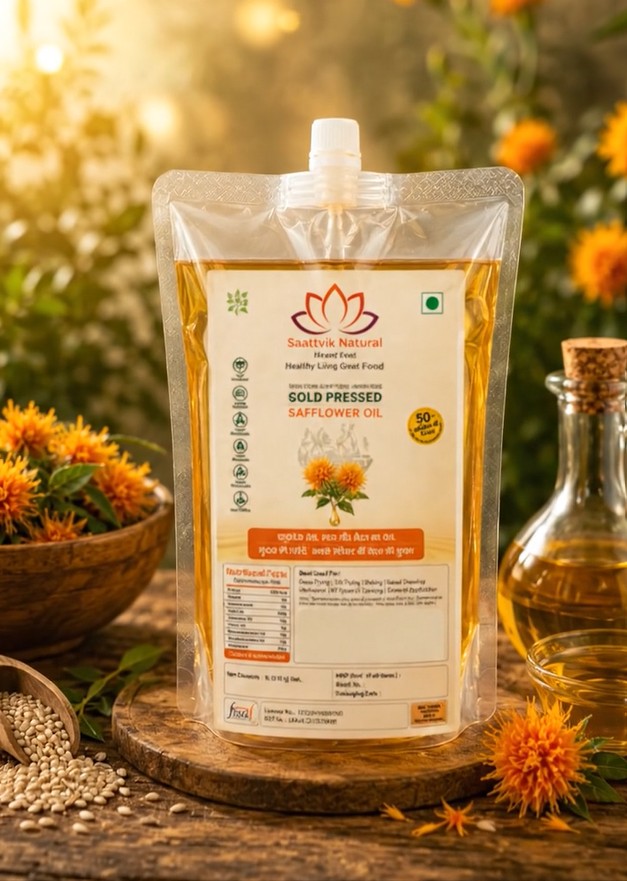
<h3>Discover how cold-pressed safflower oil compares to olive oil in heart health, antioxidants & smoke point. Pure, chemical-free oil from Saattvik Natural.</h3><h2> </h2>
Read More
Refined oils go through heat and chemical processing that strips away nutrients. Here is why cold-pressed, wood-pressed oils retain more of what your body actually needs.
Read More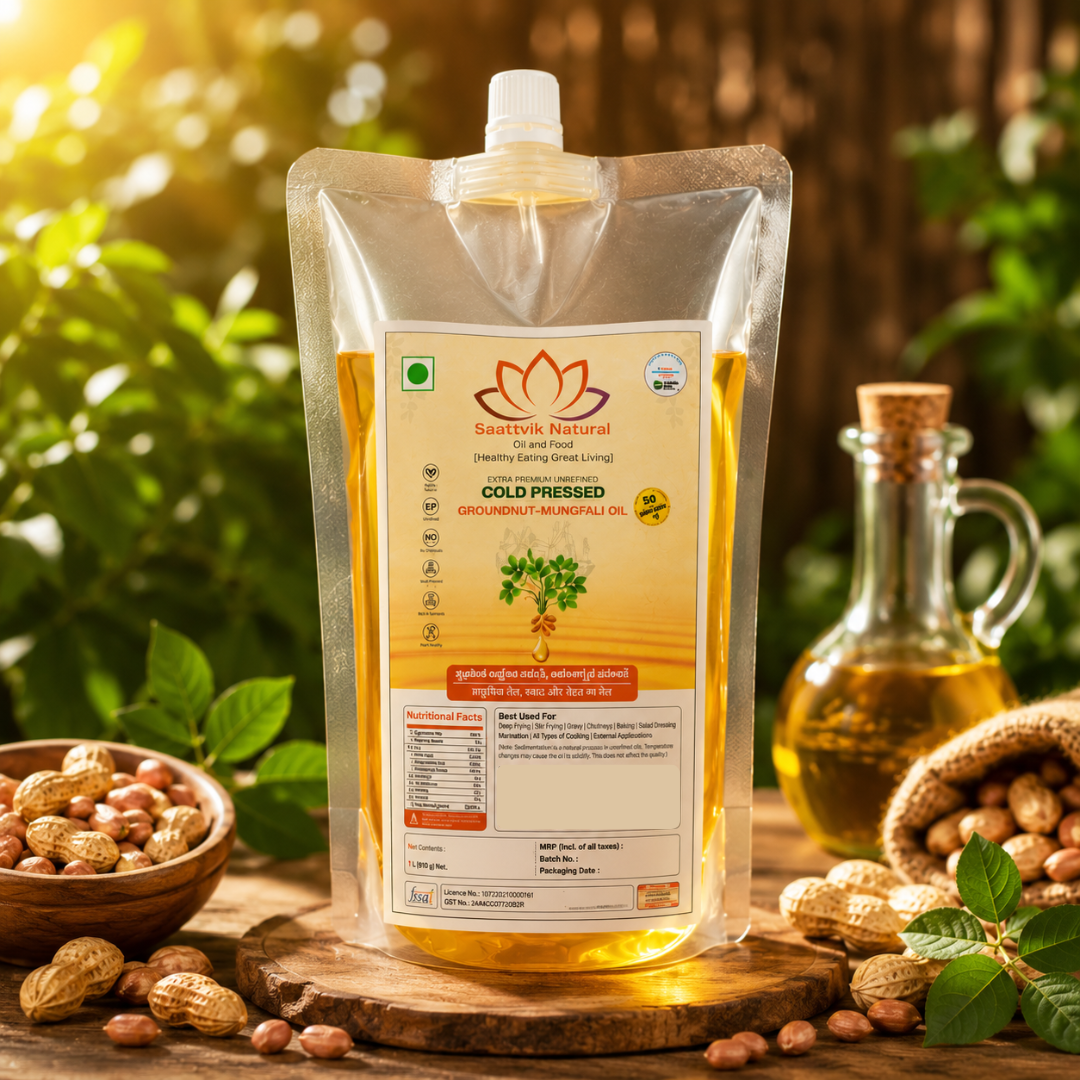
From heart health to a richer taste in your everyday cooking, here are five reasons households across India are switching back to wood pressed groundnut oil.
Read More